


Investing & Markets
Watching stock market charts bounce up and down every single day triggers a very specific kind of panic.
When prices surge, you worry you are buying at the absolute peak.
When prices crash, you freeze up, terrified that putting your cash into the market means losing it all before tomorrow morning.
Trying to time the market perfectly is a fool’s errand.
Even professional traders with multimillion-dollar software and decades of experience get it wrong half the time.
Mastering how to navigate Investing & Markets does not require predicting the future or staring at ticker symbols all afternoon.
It demands a systematic, emotion-free approach called dollar-cost averaging.
This simple strategy turns market volatility from a source of stress into your best friend.
Why Timing the Market Destroys Your Wealth
Human psychology is terrible for investing.
When the market is booming and everyone at work is bragging about their gains, FOMO kicks in.
You dump a large chunk of savings right at the top, just before a correction hits.
Once the market falls, fear takes hold and forces you to sell at a loss, swearing off the stock market completely.
Take for instance Marcus, a graphic designer who managed to save $5000 from a freelance job.
Wanting to increase his savings, he waited for what he felt would be a fall in an index fund and decided to invest his entire amount on a Tuesday evening.
Three weeks later, general news about the economy caused the market to fall by fifteen percent.
Seeing his balance fall below $4000, he became sick.
His mistake was not buying the fund; his mistake was trying to guess the exact right moment to deploy his cash.
How Dollar-Cost Averaging Removes Emotion From Your Trades
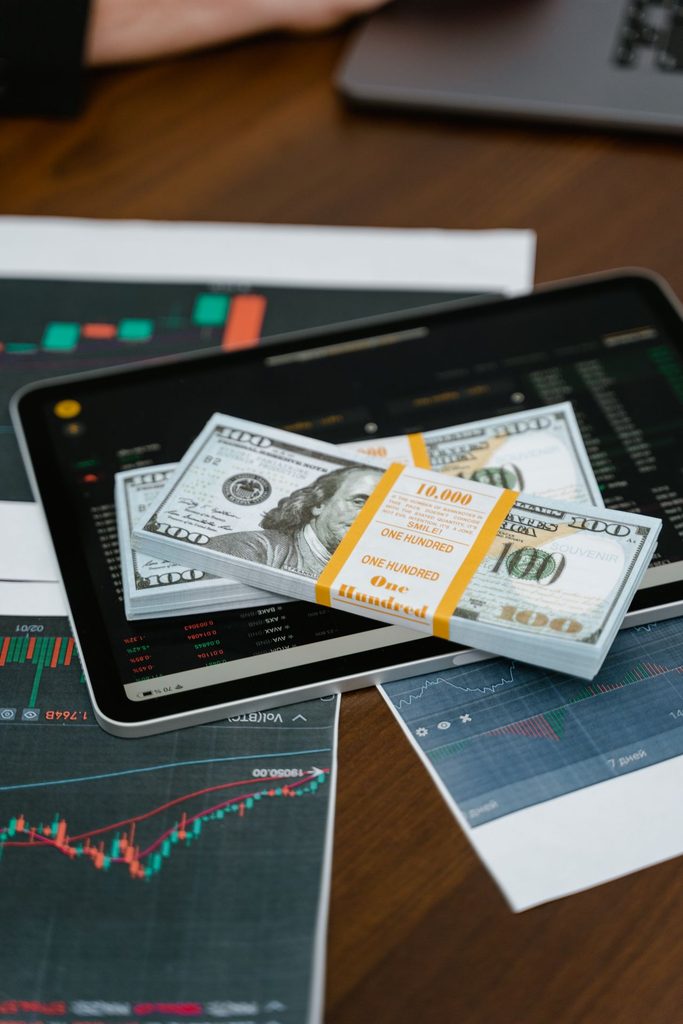
Dollar-cost averaging solves the paralysis of market timing by completely removing human decision-making from the equation.
Instead of dropping a massive lump sum all at once, you invest a fixed amount of money at regular, predetermined intervals such as fifty dollars every friday or two hundred dollars on the first of every month regardless of whether the market is soaring or crashing.
When share prices are high, your fixed dollar amount buys fewer shares.
When the market dips and prices drop, that exact same dollar amount automatically buys more shares.
Think of it like shopping at your favorite grocery store.
If you spend fifty dollars on fruit every week, you do not stop buying bananas just because the price jumped up slightly; you just end up with a few fewer bananas that week.
Conversely, when bananas go on sale, your fifty dollars gets you a cart full of them.
Dollar-cost averaging applies that exact same logic to wealth building.
The Math Behind Buying More When Prices Drop
To see why this strategy works so well, look at how shares accumulate during a volatile market cycle.
Imagine you commit to investing one hundred dollars every month into a broad market fund.
In month one, shares trade at fifty dollars each, meaning your hundred dollars buys two shares.
In month two, a market correction hits, and share prices plunge to twenty-five dollars each.
Your one hundred dollars now buys four shares.
In month three, prices recover slightly to fifty dollars, buying two shares again.
Over those three months, you invested three hundred dollars total and accumulated eight shares.
Your average cost per share ends up being thirty-seven dollars and fifty cents, even though the market price bounced around wildly.
If you had tried to time it all at once in month one, you would have paid fifty dollars flat for every share. Systematic investing automatically lowers your average purchase price during downturns without requiring any guesswork.
Step 1: Choose Your Investment Vehicle Wisely
Before setting up automated contributions, you need a vessel that fits this strategy.
Dollar-cost averaging works best with broad, diversified assets rather than individual company stocks.
Individual stocks carry high single-company risk.
If you systematically buy shares of a single failing corporation every month, you are simply doubling down on a sinking ship.
Instead, look toward total market index funds, broad exchange-traded funds (ETFs), or retirement accounts that hold hundreds of companies at once.
When you buy a broad index fund, you own a tiny slice of the entire economy.
If one company struggles, hundreds of others balance it out, making your recurring purchases far safer over decades.
Step 2: Automate Your Contribution to Remove Discomfort

The real power of dollar-cost averaging comes when you totally forget about it.
Relying on yourself and your monthly willpower to sign into your brokerage account, move your money around and conduct trades manually is not what you want to do.
Log into your online brokerage or your retirement platform and connect it with your main checking account.
Create automatic recurring transfers and trades that are aligned with your pay schedule. In case if you receive your payment twice per month, schedule a fifty-dollar trade every second Tuesday.
After setting up everything, the process will take your money from your checking account and invest it for you without giving you a chance to inflate your lifestyle with it.
Step 3: Don’t Listen to the Noise of Daily News
The financial news industry lives on panic. Media needs flashy red banners, warning tones, and words such as “crash” or “collapse” in order to grab your attention and generate revenues from advertising.
If you lose five percent of your investments during a single week because of international macroeconomic news, your first thought will tell you to stop all the automatic transactions.
It is exactly when you should stick to the plan.
Keep in mind that falls in the stock market are basically a clearance sale for investors.
Purchasing at reduced prices will make your final profit higher.
Sources & References
- U.S. Securities and Exchange Commission (SEC): Educational guides on dollar-cost averaging, systematic investing, and managing market volatility.
- Financial Industry Regulatory Authority (FINRA): Investor insights on long-term portfolio diversification and disciplined investing strategies.
The Long Game of Consistency in Investing & Markets

Getting rich using Investing & Markets takes years rather than months.
Winners over long periods are never those who choose the most popular stock of the year, but those who show up each and every month with automated contributions.
It is the process of dollar-cost averaging that helps develop resilience in the face of bear markets and economic instability.
It allows you to rest assured knowing that the temporary market volatility works in your favor by letting you buy stocks at lower prices.
You do not have to inherit money, work on Wall Street, or even be lucky with timing to create financial security for yourself.
All you need to do is to stick to the plan, contribute a certain sum each month, and allow time to do all the work for you.
Create your first recurring transaction right now, close the investing tab, and watch your passive success accumulate over time.
Disclaimer: This article was written purely for informational and educational purposes and does not constitute professional financial advice.
Everyone’s financial situation is unique, so it might be worth it to talk to a professional financial advisor about it.
